
Quick answer
PFAS are a large, diverse family of manufactured fluorinated chemicals. They have been used for decades because some PFAS can resist heat, oil, water, stains, or chemical attack. That same chemical stability is part of the reason many PFAS persist in the environment, which is why they are often called “forever chemicals.”
The important point is that PFAS is not one chemical and not every PFAS behaves the same way. PFOA and PFOS are two of the most studied PFAS. PTFE, the fluoropolymer commonly associated with nonstick coatings such as Teflon-branded products, is chemically and physically very different from small, mobile PFAS such as PFOA and PFOS.
For most people, the practical questions are not simply “Are PFAS present somewhere?” but:
- Is there a meaningful source of exposure?
- Which PFAS are involved, and at what level?
- What does the evidence say about those specific substances?
- Is there a realistic way to reduce the exposure?
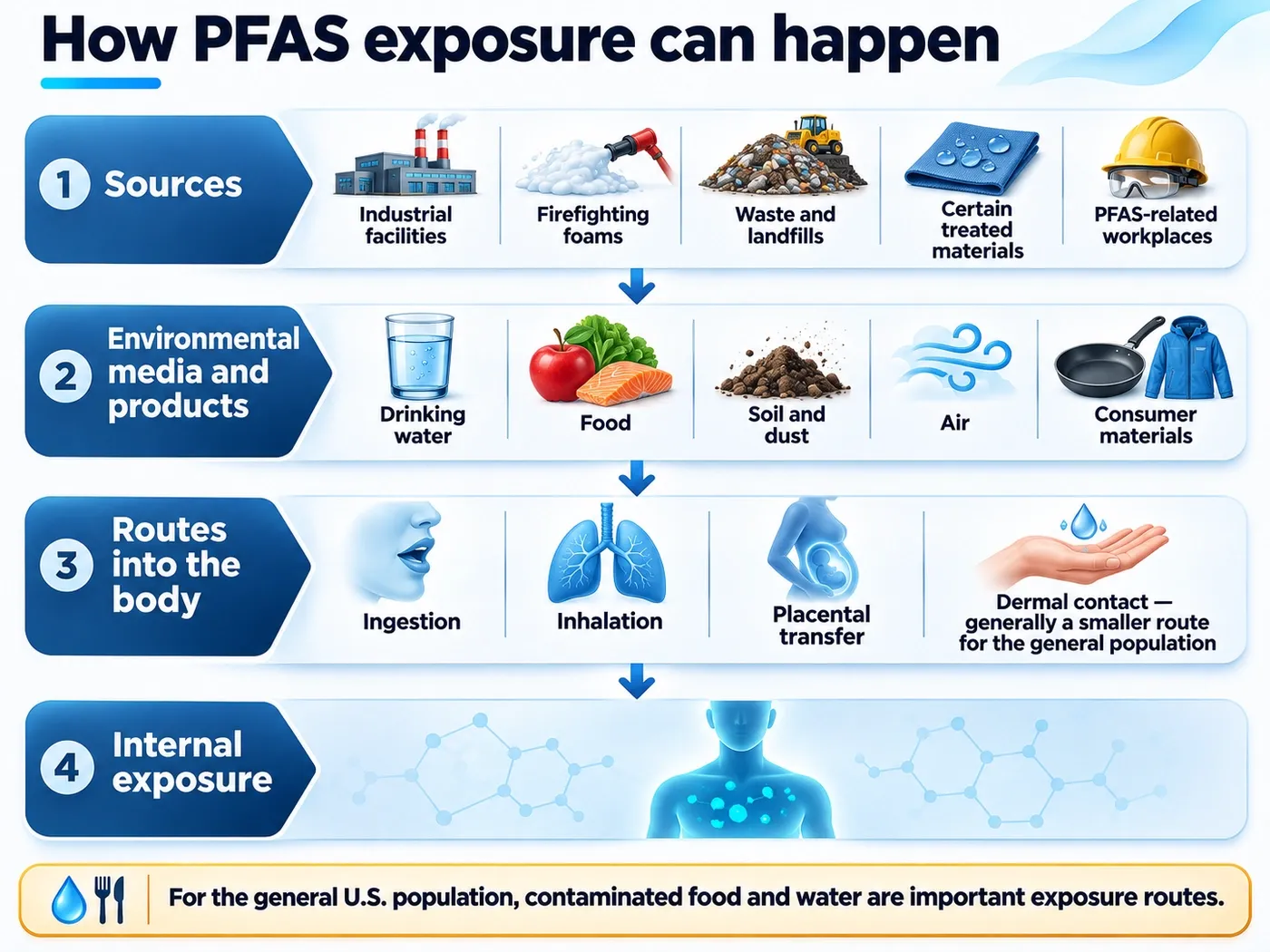
For the U.S. general population, contaminated food and water are important exposure routes. In communities with contaminated drinking water, the water supply can become a major source. If you are concerned, the most useful first step is usually to check your local water information or test a private well when local authorities recommend it—not to buy a random “detox” product or assume every household item presents the same risk.
The distinction that matters: finding a chemical, being exposed to it, and developing a health effect are three different things. Presence does not automatically equal a dangerous dose, and exposure does not mean disease is inevitable.
This article reflects U.S. federal information available through November 5, 2026. State rules can be more stringent, and PFAS science and regulation continue to change.
When to use this explanation
This guide is a good starting point if you:
- saw PFAS mentioned in a drinking-water report or local news story;
- want to understand the difference between PFAS, PFOA, PFOS, PTFE, Teflon, and GenX;
- are worried about possible health effects but want the evidence separated from headlines;
- are considering a water filter and want to know what a filter can—and cannot—do;
- are trying to decide whether a PFAS blood test would tell you something useful;
- are confused by claims such as “PFOA-free,” “PFAS-free,” or “forever chemical”;
- want practical ways to reduce exposure without treating every possible PFAS source as equally important.
This is not a substitute for site-specific environmental advice or individual medical care. If your home, workplace, well, or community has documented PFAS contamination, use the measurements and guidance from the relevant health or environmental authorities as the starting point for decisions.
Before you start: four concepts that prevent most PFAS confusion
PFAS discussions become much clearer when four ideas are kept separate.
| Concept | What it means | Example |
|---|---|---|
| Presence | A PFAS can be detected in a material, food, water sample, or the environment. | A laboratory detects PFOA in a water sample. |
| Exposure | A PFAS reaches the body through ingestion, inhalation, placental transfer, or another route. | A person regularly drinks contaminated water. |
| Hazard | A substance is capable of causing a harmful effect under some conditions. | IARC has classified PFOA as carcinogenic to humans. |
| Risk | The probability and severity of harm under actual conditions of exposure. | Risk depends on the substance, dose, duration, route, age, and other factors. |
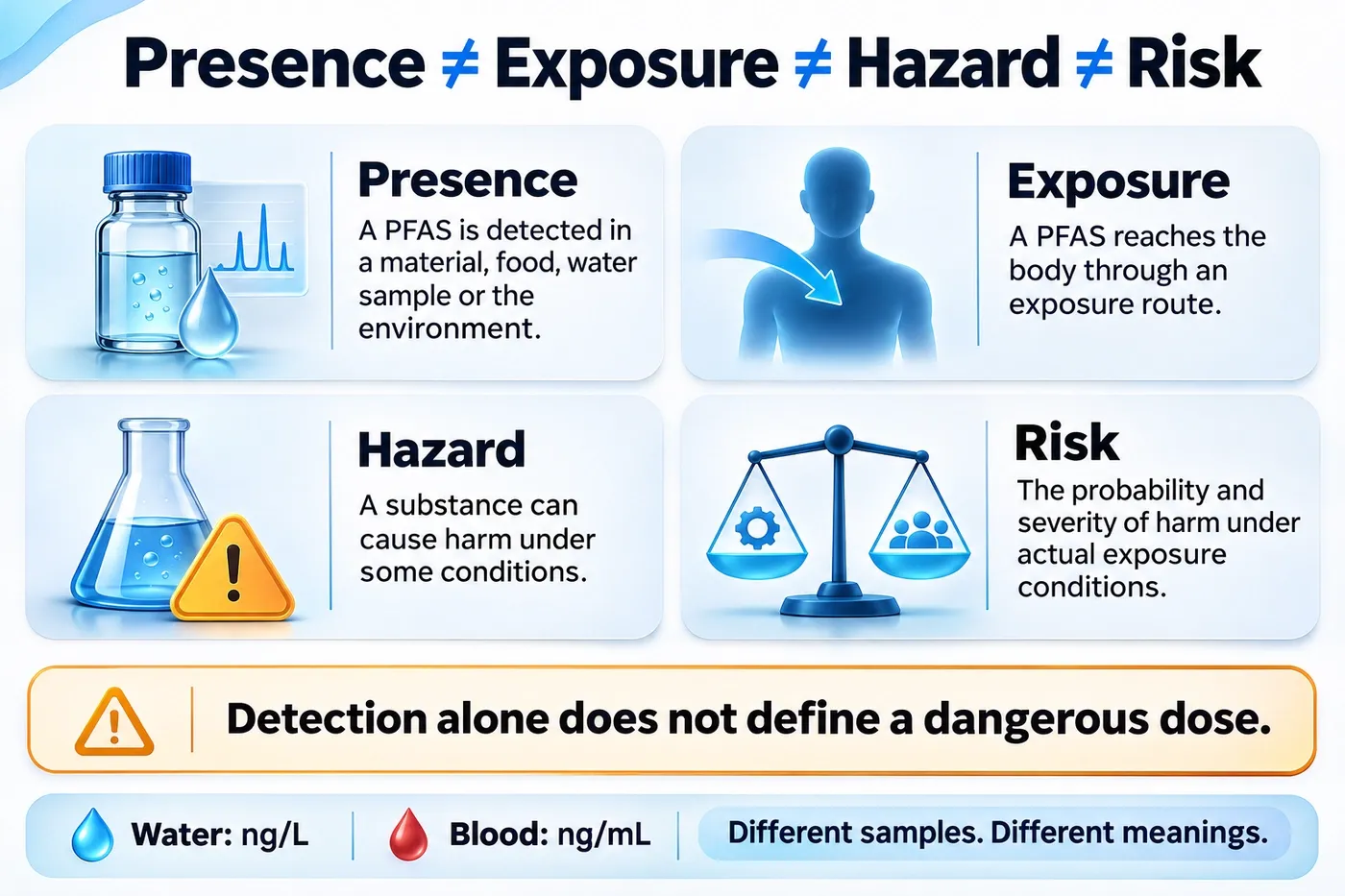
That distinction is especially important when interpreting cancer classifications, product testing, and blood results. A hazard classification does not tell you the probability that a particular person will develop a disease.
Also keep the units separate. Nanograms per liter (ng/L) in water and nanograms per milliliter (ng/mL) in blood describe different samples and cannot be compared as if they were the same threshold.
What are PFAS?
PFAS stands for per- and polyfluoroalkyl substances. The term covers thousands of manufactured chemicals that contain fluorinated carbon structures. They are not one uniform substance, and scientists do not assume that every PFAS has the same persistence, mobility, bioaccumulation, exposure pattern, or toxicity.
The U.S. Environmental Protection Agency describes PFAS as a group of manufactured chemicals used in industrial and consumer applications since the 1940s. Their useful properties have supported applications involving resistance to heat, oil, grease, stains, and water. Those applications have also created many possible pathways into air, water, soil, waste streams, wildlife, and food.
PFAS vs PFOA vs PFOS vs PTFE
These terms are often mixed together even though they describe different things.
| Term | What it is | Why it matters |
|---|---|---|
| PFAS | The broad family of per- and polyfluoroalkyl substances | It is not a single chemical or a single toxicity profile. |
| PFOA | Perfluorooctanoic acid, a specific PFAS | Extensively studied; historically used as a processing aid in fluoropolymer manufacturing and associated with several health outcomes. |
| PFOS | Perfluorooctane sulfonate/sulfonic acid, a specific PFAS | Extensively studied; historically used in applications including some firefighting foams and surface treatments. |
| PTFE | Polytetrafluoroethylene, a fluoropolymer | Used in nonstick and other high-performance applications; it behaves very differently from small PFAS such as PFOA. |
| Teflon | A brand name historically associated with PTFE and other fluorinated products | It is not the chemical name for PFOA and is not a synonym for all PFAS. |
| GenX chemicals | A term commonly used for HFPO-DA and related processing technology | They are PFAS, but they should not be treated as a synonym for all newer or short-chain PFAS. |
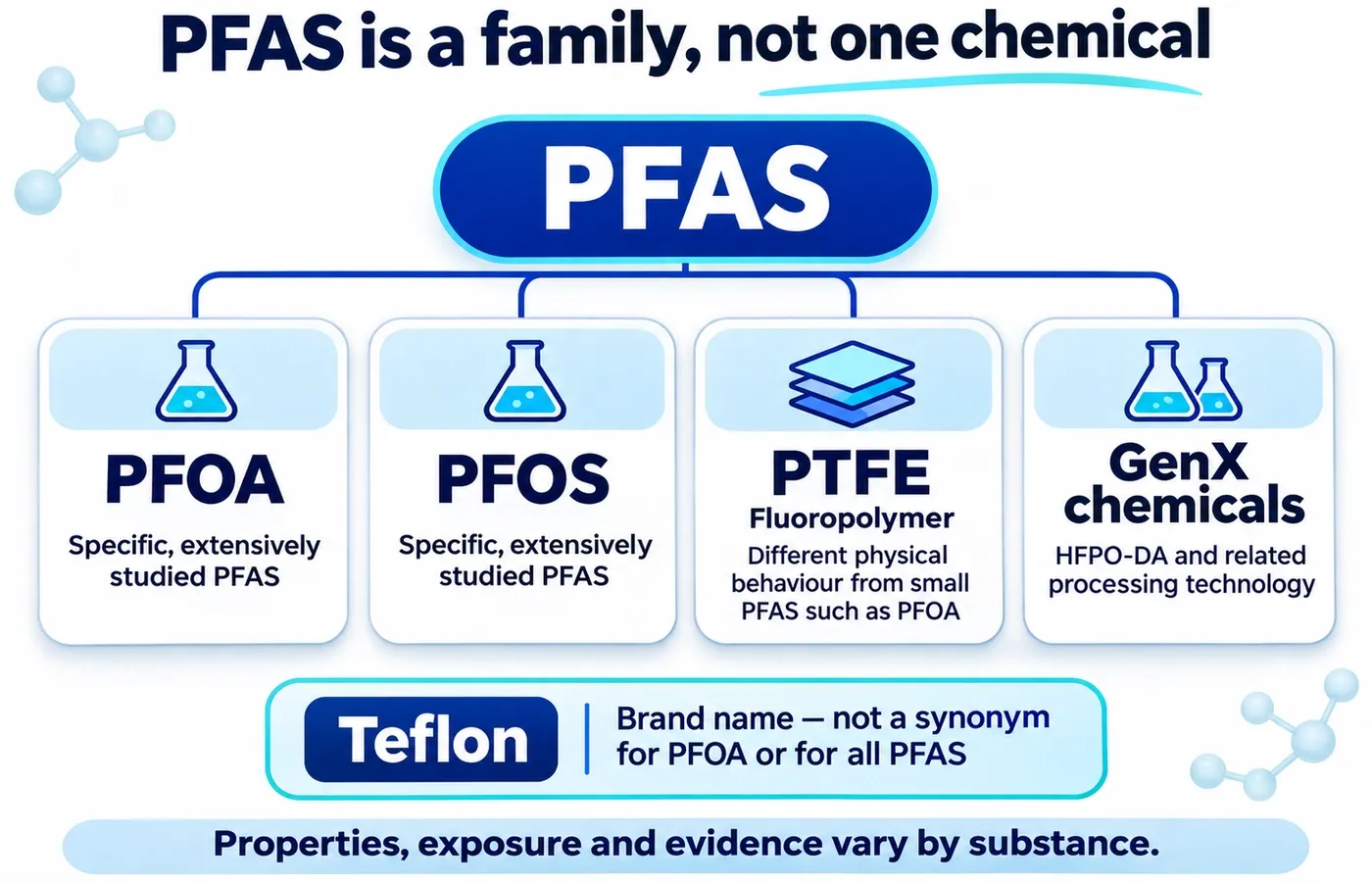
A useful historical distinction is that PFOA was used as a processing aid in the manufacture of some fluoropolymers; PFOA is not PTFE itself. That difference matters when people ask whether a nonstick pan is the same thing as drinking water contaminated with PFOA. It is not.
The FDA says authorized nonstick food-contact coatings are polymerized, tightly bound materials and that the amount of PFAS capable of migrating to food from these coatings is negligible under the uses it evaluates. That does not make every fluorinated material environmentally equivalent or remove questions about manufacturing and disposal, but it does show why “PFAS” cannot be treated as one exposure scenario.
Is fluoride the same as PFAS?
No. Fluoride is not PFAS. Fluoride is the negatively charged fluorine ion, while PFAS are organic fluorinated compounds with carbon-based structures. The fact that both involve fluorine does not make them the same chemical category.
This is why searches about fluoride toothpaste, water fluoridation, or dental fluoride should not be merged into a PFAS health article.
Why are PFAS called “forever chemicals”?
The nickname comes from the environmental persistence of many PFAS. Carbon-fluorine bonds are unusually strong, and many fully or highly fluorinated structures resist the biological, chemical, and physical processes that normally break organic compounds down.
But “forever” is a communication shortcut, not a literal chemical law. Some PFAS can transform, and specialized treatment processes can degrade or destroy particular PFAS under controlled conditions. The problem is that many PFAS do not readily break down under ordinary environmental conditions, and a treatment that works well for one PFAS or one waste stream may perform poorly for another.
Persistence is not the same as toxicity
Four properties are often blurred together:
| Property | Meaning |
|---|---|
| Persistence | How slowly a substance breaks down in the environment. |
| Mobility | How readily it moves through water, soil, air, or other media. |
| Bioaccumulation | The tendency to build up in an organism over time. |
| Toxicity | The ability to cause harmful biological effects under particular exposure conditions. |
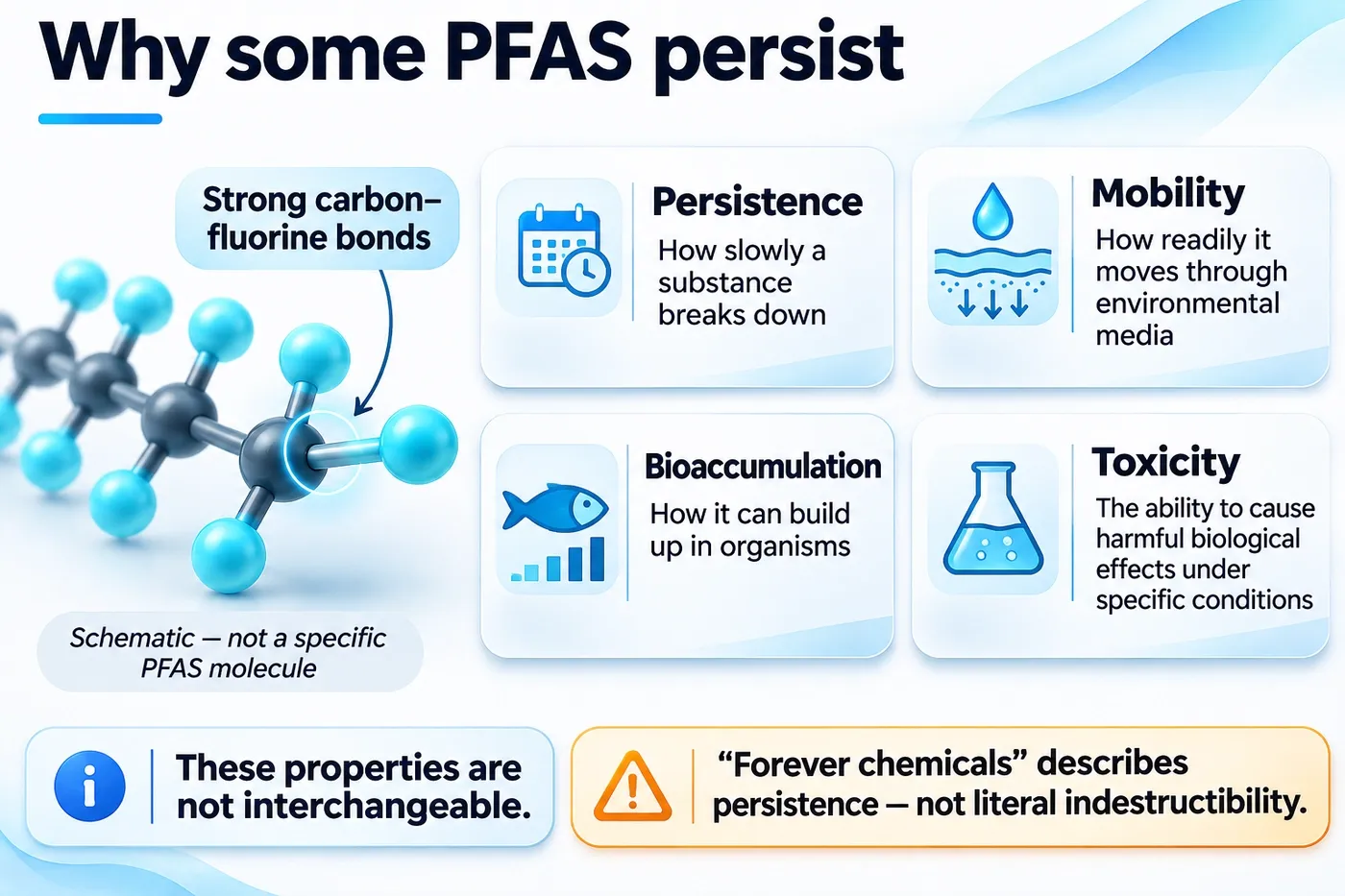
A substance can be persistent without having the same toxicity or bioaccumulation pattern as another persistent PFAS. Conversely, a shorter-chain PFAS may be less bioaccumulative than some older PFAS while being more mobile in water and harder to capture with certain treatment media.
That is one reason regulators and scientists increasingly evaluate individual PFAS, subclasses, mixtures, uses, and life-cycle emissions rather than assuming a single behavior for the entire family.
Where are PFAS found?
PFAS have been detected in water, soil, air, wildlife, and people. They have also been used in industrial processes and in products designed to resist water, oil, grease, heat, or stains.
For exposure, however, the important question is not simply where PFAS can exist. It is where they are present in a form and amount that can reach you.
Drinking water
Drinking water is one of the most important PFAS exposure pathways in contaminated communities. Sources can include:
- releases from facilities that manufactured, used, or handled PFAS;
- historical use of aqueous film-forming firefighting foam, including around some airports and military or firefighting training sites;
- contaminated groundwater, surface water, or private wells;
- landfills and certain waste streams;
- wastewater and biosolids pathways;
- atmospheric emissions followed by deposition onto land and water.
The Cape Fear River case in North Carolina is a useful example of why source tracing is complicated. PFAS in a watershed can originate from more than one activity. A wastewater treatment plant may receive PFAS from upstream industrial users without having manufactured those PFAS itself, and conventional treatment systems were not necessarily designed to remove them.
That means a single downstream measurement does not, by itself, prove which source produced every PFAS in the sample. Attribution requires chemical analysis, sampling over space and time, knowledge of industrial and hydrological pathways, and other evidence.
Food
Food can contribute to PFAS exposure, but the pattern is not as simple as a universal list of “high-PFAS foods.”
The FDA’s current U.S. testing program reports that most fresh and processed foods it has tested in the general food supply did not contain PFAS above the method detection limit. Foods produced in areas with known environmental contamination can present different circumstances, and seafood is an area of particular regulatory attention because some surveys have found PFAS more frequently there.
The practical lesson is to avoid turning limited studies or a single contaminated region into a claim that an entire food category is always high in PFAS.
Food packaging
PFAS-containing grease-proofing agents were historically used in some paper and paperboard food packaging. That history is important, but U.S. advice must be current.
In February 2024, the FDA announced that PFAS-containing grease-proofing substances were no longer being sold into the U.S. market for paper food packaging. In January 2025, the FDA determined that 35 related food-contact notifications were no longer effective because those uses had been abandoned.
So an old example involving a microwave-popcorn bag or fast-food wrapper should not be generalized into the claim that every such package sold in the United States today contains the same PFAS treatment.
Consumer products and household dust
Depending on the product and time period, PFAS have been used in some stain-resistant, water-resistant, cleaning, personal-care, coating, sealant, and other applications. Residue or dust can contribute to exposure.
ATSDR notes, however, that for PFOA and PFOS, exposure from today’s consumer products is generally lower than exposure from PFAS-contaminated drinking water. The relative importance of sources varies by community and individual situation.
Workplaces
People who manufacture, use, process, or handle PFAS can have occupational exposure patterns that differ substantially from the general population. In those settings, inhalation and workplace-specific contact can matter more, and occupational-health guidance is more appropriate than general consumer advice.
How do PFAS get into the body?
For the general U.S. population, ingestion of food and water is a main route of exposure. ATSDR also identifies inhalation and placental transfer as routes in relevant circumstances.
Dermal absorption appears limited for the general population and is not considered a major route compared with ingestion. This is why showering or bathing in PFAS-contaminated water is generally a much smaller exposure concern than drinking the same contaminated water.
Children can have different exposure patterns because they consume more food and water relative to body weight and can ingest dust or soil through normal hand-to-mouth behavior.
Some PFAS can cross the placenta. PFAS can also be present in breast milk, but ATSDR and CDC state that the established benefits of breastfeeding generally outweigh the potential risks from PFAS exposure through breast milk. A PFAS concern alone is not a reason to stop breastfeeding without individualized medical guidance.
What are the health risks of PFAS?
The strongest evidence does not support the statement that every PFAS causes the same disease. Research has identified associations between exposure to specific PFAS and specific health outcomes, with different levels of evidence.
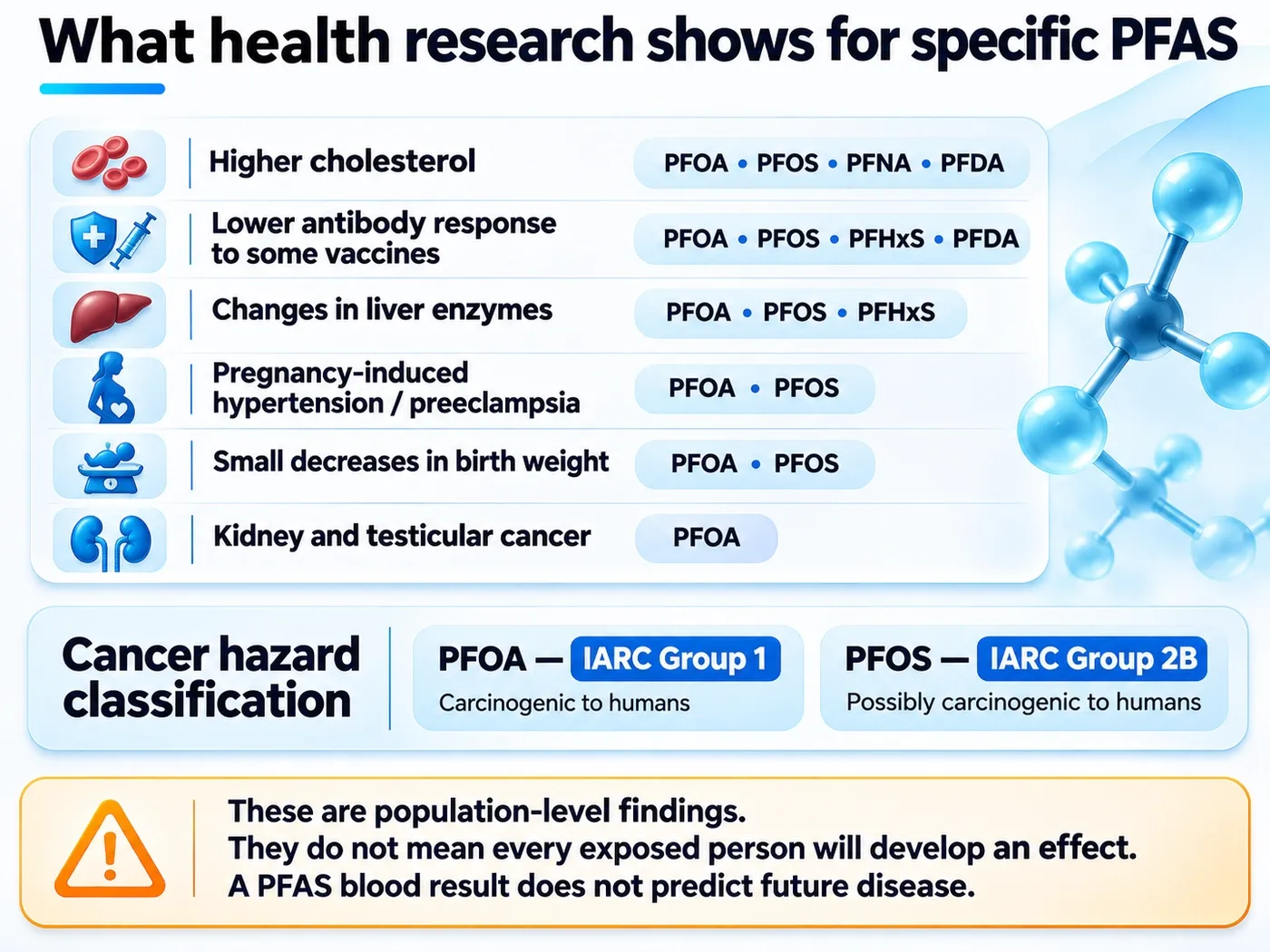
ATSDR summarizes epidemiological evidence associating increases in exposure to certain PFAS with outcomes that include:
- increased cholesterol levels, particularly for PFOA, PFOS, PFNA, and PFDA;
- lower antibody response to some vaccines for several studied PFAS;
- changes in liver enzymes for PFOA, PFOS, and PFHxS;
- pregnancy-induced hypertension and preeclampsia for PFOA and PFOS;
- small decreases in birth weight for PFOA and PFOS;
- kidney and testicular cancer in relation to PFOA exposure.
These are population-level findings. They do not mean that every exposed person will develop an effect or that a single blood result can identify the cause of an existing illness.
Do PFAS cause cancer?
The most precise answer is some PFAS have specific cancer hazard classifications, but those classifications cannot be generalized to the entire PFAS family.
In IARC Monographs Volume 135:
- PFOA is classified as carcinogenic to humans (Group 1). IARC’s evaluation was based on sufficient evidence in experimental animals and strong mechanistic evidence, with limited evidence in humans for testicular cancer and renal cell carcinoma.
- PFOS is classified as possibly carcinogenic to humans (Group 2B). IARC found strong mechanistic evidence, but the evidence for cancer in humans was inadequate.
An IARC classification answers a hazard question: can the agent cause cancer under some conditions? It does not tell you the absolute cancer risk for a particular person at a particular dose.
Why exposure level and duration matter
Health risk depends on more than the name of the chemical. Relevant factors can include:
- which PFAS is involved;
- concentration or dose;
- how often and how long exposure occurs;
- route of exposure;
- age and life stage;
- other health and environmental factors.
That is why a trace detection in a product should not be interpreted the same way as years of drinking water exposure in a highly contaminated community.
Can PFAS build up in the body?
Some PFAS can remain in the body for long periods. Their biological half-lives vary by substance and by individual factors, and some studied PFAS have half-lives measured in years.
This is also why reducing an ongoing exposure can matter even when it does not make the body burden disappear immediately. Blood levels reflect the balance between past and current exposure and the body’s elimination of the specific compounds.
“Bioaccumulation” should not be treated as a property that is equally strong for every PFAS. Different molecules can have very different toxicokinetic behavior.
How can you tell if you have been exposed to PFAS?
Symptoms cannot diagnose PFAS exposure
PFAS toxicity is not associated with a unique set of characteristic signs or symptoms. A person with known exposure can feel well, and common conditions such as high cholesterol have many causes unrelated to PFAS.
If a website gives you a generic symptom checklist and claims it proves that PFAS are in your body, that is not a scientifically reliable diagnostic method.
What can a PFAS blood test tell you?
A PFAS blood test can measure the concentration of certain PFAS in your blood at a point in time. In the right context, that information may help establish a baseline or support decisions about reducing a known exposure.
A blood test cannot reliably tell you:
- which source caused the exposure;
- when the exposure occurred;
- whether a current illness was caused by PFAS;
- whether you will develop a future health problem;
- whether PFAS that were not included in the laboratory panel are present.
ATSDR has not established a blood concentration that functions as a universal diagnostic threshold for PFAS disease. It recommends that clinicians consider exposure history, environmental testing, individual risk factors, and the potential benefits and downsides of testing.
Nearly all people in the United States have measurable amounts of at least some PFAS in their blood. Therefore, a detectable result is not, by itself, evidence of an unusual or dangerous exposure.
When is it worth discussing testing with a clinician?
A conversation with a health professional is more useful when there is a concrete reason for concern, such as:
- documented contamination in your public water system or private well;
- a known occupational exposure;
- participation in a community exposure investigation;
- a laboratory result that needs interpretation in the context of your health and exposure history.
For high-exposure situations, clinicians with expertise in occupational and environmental medicine or medical toxicology can be helpful.
How to check PFAS in your drinking water
For U.S. readers, this is often the most actionable part of the PFAS question.
1. Identify your water source
Determine whether you use:
- a public water system;
- a private well;
- another private or shared source.
Public systems and private wells are managed differently, and the testing information available to you will differ.
2. Check your public water system’s information
Look for your utility’s Consumer Confidence Report and any PFAS-specific sampling information. State environmental or health agencies may publish additional data, maps, advisories, or test results.
The federal PFAS drinking-water rule requires public systems to complete initial monitoring and report results under the regulatory schedule. Because implementation is evolving, use the current EPA and state pages rather than relying on an old news article.
3. If you use a private well, follow state or local testing guidance
Private wells are not regulated in the same way as public water systems. If PFAS contamination is known or suspected in your area, contact your state or local health or environmental agency for recommended laboratories, sampling methods, and interpretation.
PFAS sampling is technically demanding. Poor sampling technique or PFAS-containing materials used during collection can contaminate a sample, so use a laboratory and method appropriate for the purpose of the test.
4. Read the result in context
Do not stop at the total number. Check:
- which individual PFAS were tested;
- which were detected;
- the units;
- the date of sampling;
- the applicable federal and state standards or advisory values;
- whether the result represents a single sample or a regulatory running average.
For drinking water, 1 part per trillion (ppt) is commonly expressed as 1 nanogram per liter (ng/L).
What are the U.S. federal PFAS drinking-water limits?
The regulatory picture is unusually important to date correctly.
In April 2024, EPA finalized the first federal National Primary Drinking Water Regulation for six PFAS. The rule set enforceable Maximum Contaminant Levels (MCLs) of:
| PFAS | 2024 federal MCL |
|---|---|
| PFOA | 4.0 ppt (4.0 ng/L) |
| PFOS | 4.0 ppt (4.0 ng/L) |
| PFHxS | 10 ppt |
| PFNA | 10 ppt |
| HFPO-DA (GenX chemicals) | 10 ppt |
| Mixtures of two or more of PFHxS, PFNA, HFPO-DA, and PFBS | Hazard Index of 1 |
However, the 2026 status requires an important qualification.
In May 2026, EPA proposed to rescind the regulatory determinations and drinking-water regulations for PFHxS, PFNA, HFPO-DA, and the Hazard Index mixture. EPA also separately proposed a framework that could extend the PFOA and PFOS compliance deadline to 2031 for eligible systems while retaining the 4.0-ppt MCLs.
As of November 5, 2026, EPA still describes both actions as proposed rules. They should not be written about as if the rescission or extension were already final.
For a practical reader, the most stable takeaway is this: EPA has retained the 4.0-ppt federal MCLs for PFOA and PFOS, while other parts of the 2024 rule and compliance timing are under active rulemaking. Always check the current EPA rule page and your state requirements before making a regulatory decision.
Do home water filters remove PFAS?
Some do. Not every filter does, and “filter” is not a single technology.
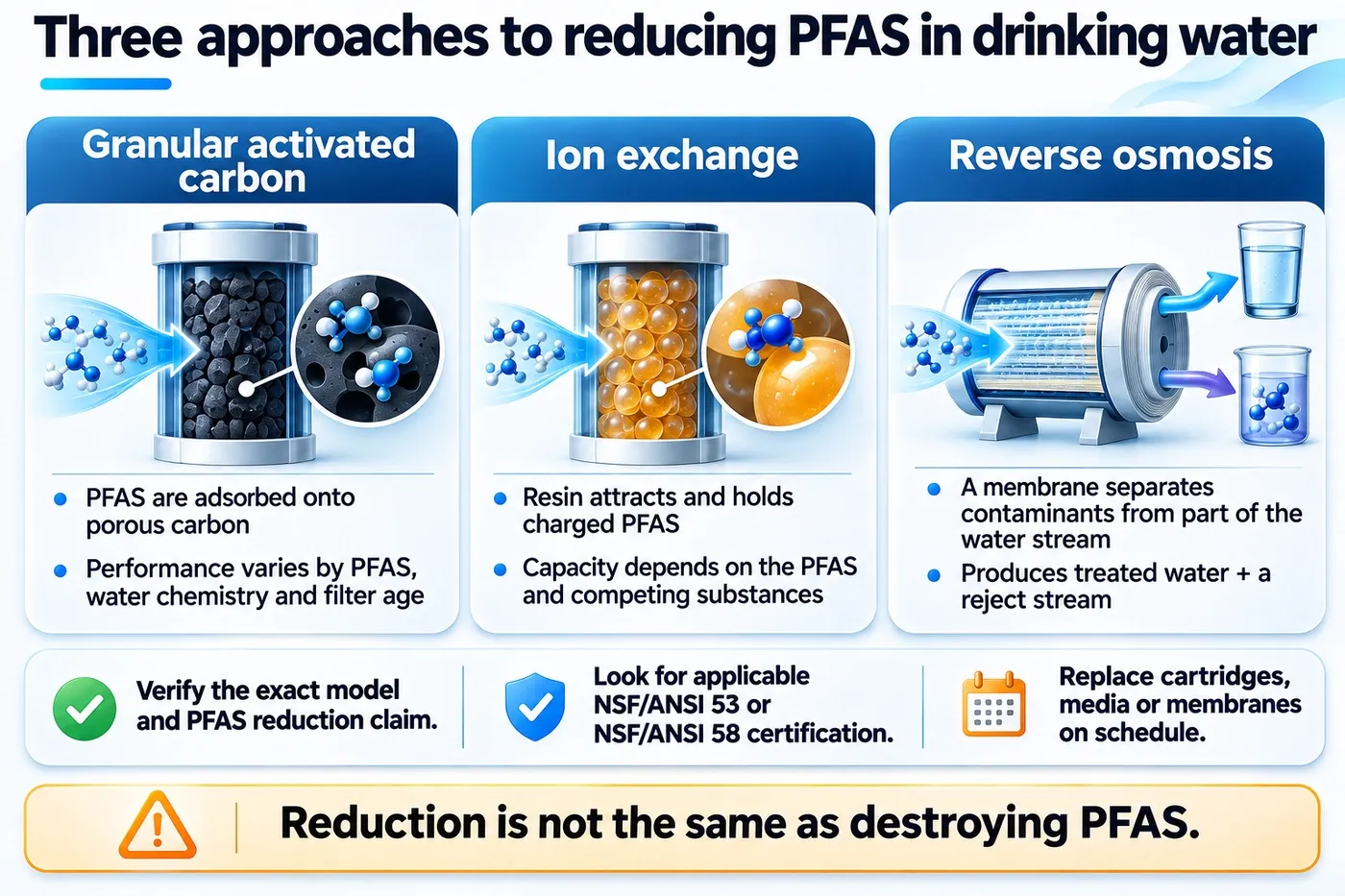
EPA identifies three important approaches for reducing PFAS in drinking water:
| Technology | What it does | Practical limitation |
|---|---|---|
| Granular activated carbon (GAC) | Adsorbs many PFAS onto carbon media | Performance varies by PFAS, water chemistry, contact time, and filter age. |
| Ion exchange | Uses resins that bind charged PFAS | Capacity and effectiveness depend on the specific PFAS and competing substances in the water. |
| Reverse osmosis (RO) | Uses a membrane to separate contaminants from part of the water stream | Produces a reject stream and requires maintenance; systems vary in performance. |
What certification should you look for?
EPA recommends looking for independent certification to NSF/ANSI 53 or NSF/ANSI 58 with a PFAS reduction claim, then checking the certifier’s product directory and the manufacturer’s performance data.
Do not stop at a logo on the package. Verify:
- the exact model number;
- the exact PFAS reduction claim;
- what concentration the product was tested against;
- how much water can be treated before replacement;
- whether the replacement schedule is realistic for your household.
EPA also cautions that a certification claim does not automatically prove that a filter will reduce every PFAS to the current federal MCL. The specific claim and performance data matter.
Maintenance is part of the treatment
A neglected filter is not the same as a functioning filter. Replace cartridges or membranes on schedule and follow the manufacturer’s installation and maintenance requirements.
If your water has documented PFAS contamination, choose treatment based on the actual compounds and concentrations rather than buying whatever product has the word “PFAS” in advertising.
Does boiling water remove PFAS?
No. Boiling is not a PFAS-removal method. PFAS do not simply evaporate away with the water, and evaporation can increase the concentration of contaminants that remain.
Bottled water is not automatically PFAS-free
Switching from tap water to bottled water can reduce exposure in some contamination emergencies, but “bottled” is not a synonym for “PFAS-free.”
In a 2023-2024 FDA targeted survey, PFAS were detected in 10 of 197 bottled-water samples. The FDA reported that none of the detected levels would have exceeded EPA’s public drinking-water MCLs if those samples had been public drinking water. In 2026, FDA said it was still working on a regulation to establish allowable PFAS levels for bottled water while reviewing EPA’s 2026 proposed changes.
The useful decision is therefore not “tap versus bottle” in the abstract. It is which tested source has the lower relevant PFAS concentrations for your situation.
How to reduce PFAS exposure: five practical steps
The goal is not to create an impossible PFAS-free life. The goal is to identify and reduce the sources that are most relevant to you.
1. Start with documented local exposure, especially drinking water
If you live in an area with known contamination, use local data first. Check your water system, state agency, local health department, or private-well guidance.
This is usually more useful than trying to eliminate every possible PFAS-containing household product.
2. Use a verified water treatment if your water warrants it
Choose a system with an appropriate independent certification and performance claim. Match the filter to the problem, and maintain it correctly.
If authorities recommend an alternate water source during a contamination response, follow their instructions for drinking, cooking, infant formula, and other activities that can lead to ingestion.
3. Treat “PFAS-free” and “PFOA-free” as different claims
PFOA-free does not mean PFAS-free. It means the claim addresses PFOA, one specific PFAS.
For a product marketed as PFAS-free, look for a clear definition of what the manufacturer excluded and whether the claim is backed by testing, certification, or transparent material specifications.
4. Put product choices in perspective
Consumer products can contribute to exposure, but their importance varies. If your drinking water is highly contaminated, replacing a random household item while continuing to drink the same water misses the larger source.
Conversely, if you have no known water contamination, reasonable product choices can still reduce avoidable exposure without treating every fluorinated material as an emergency.
5. Get professional help for documented high exposure
If you have a confirmed environmental or occupational exposure, use state/local public-health guidance and discuss medical questions with a clinician. The most useful medical approach is an exposure history plus standard preventive care—not a one-size-fits-all PFAS detox protocol.
Is Teflon cookware the same PFAS risk as contaminated water?
No. This is one of the most common category errors in PFAS discussions.
A PTFE nonstick coating is a polymeric material. PFOA is a different PFAS that was historically used as a processing aid in some fluoropolymer manufacturing. An exposure scenario involving trace migration from a finished polymer coating is not equivalent to repeatedly ingesting small, mobile PFAS in contaminated water.
The FDA states that authorized nonstick coatings are polymerized and tightly bound and contain a negligible amount of PFAS capable of migrating to food under the uses it evaluates.
That does not mean all questions about fluoropolymer manufacturing, disposal, emissions, or overheating disappear. It means the risk should be described accurately rather than by saying “Teflon is PFOA” or “any PFAS-containing pan is equivalent to contaminated drinking water.”
If you use nonstick cookware, follow the manufacturer’s instructions, avoid misuse, and replace cookware that is physically damaged according to the manufacturer’s guidance.
Can PFAS be removed from the body?
PFAS levels can decline when exposure is reduced and the body eliminates the compounds over time, but the rate depends on the specific PFAS and the individual. Some PFAS have biological half-lives measured in years.
There is no approved PFAS “detox”
ATSDR states that no approved medical treatment is available to reduce PFAS in the body.
That means there is no evidence-based reason to buy supplements, cleanses, or home remedies that claim to “flush forever chemicals” from your blood. A product can be marketed as a detox without having been shown to improve health outcomes or remove the PFAS you are concerned about.
Research has explored interventions that change blood concentrations of some PFAS, but reducing a biomarker is not the same as proving a clinical benefit. Such research should not be turned into a do-it-yourself treatment recommendation.
The primary strategy remains identify and reduce ongoing exposure.
Can PFAS be destroyed?
Yes—some PFAS can be degraded or destroyed under specialized conditions. That does not mean there is one universal treatment for every PFAS-contaminated water, soil, sludge, or waste stream.
Removal is not the same as destruction
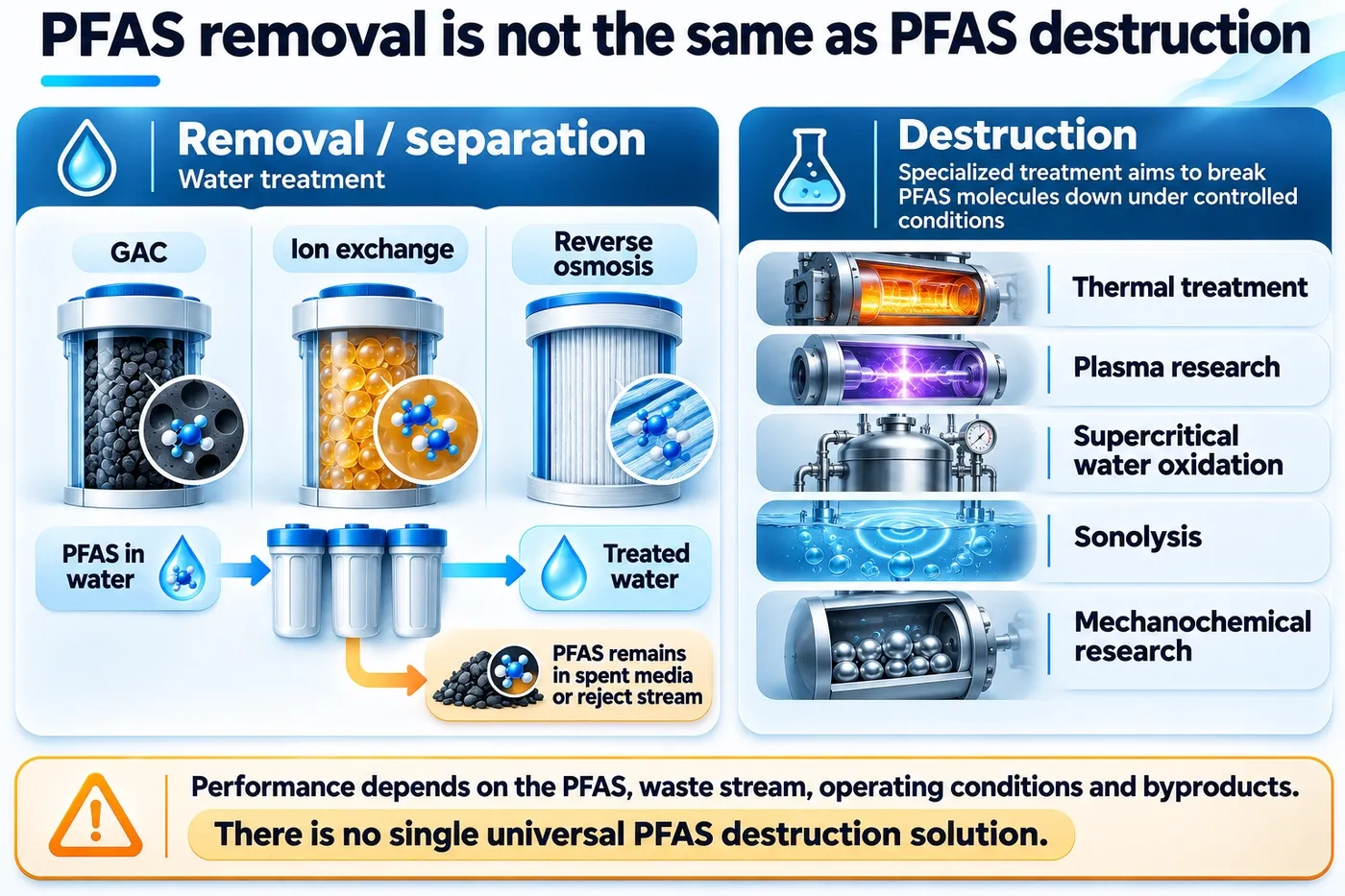
A home filter generally captures or separates PFAS. The PFAS still exist in the spent carbon, resin, membrane reject, or other waste stream.
Destruction aims to break the molecules down far enough that the original PFAS no longer remain, ideally with substantial defluorination and without creating problematic intermediate products.
Technologies under research and development
Research and specialized treatment systems have examined approaches including:
- sonolysis/ultrasonication;
- supercritical water oxidation;
- plasma treatment;
- mechanochemical processes such as ball milling;
- thermal treatment under controlled conditions.
Their effectiveness depends on the PFAS involved, concentration, water or waste matrix, energy input, operating conditions, scale, and how intermediate products and fluoride are managed.
EPA’s 2026 destruction-and-disposal guidance emphasizes that the science still contains uncertainties and that treatment decisions need to be made for specific waste streams and operating conditions.
An example of emerging capture research
A 2026 Angewandte Chemie International Edition study reported a molecular-cage-based adsorbent designed to improve capture of short-chain PFAS. Mesoporous silica containing about 1% of the cage removed more than 98% of the short- and long-chain PFAS tested under the study’s flow-through conditions and was regenerated over repeated cycles.
That is a promising materials result. It is not evidence that consumer filters containing this technology are already widely available, that the material destroys the captured PFAS, or that it solves PFAS treatment at municipal scale. It is a good example of the difference between a strong laboratory result and a mature, certified drinking-water product.
Common PFAS mistakes
Mistake 1: treating PFAS as one chemical
Why it matters: the family includes substances with different physical behavior, exposure routes, persistence, bioaccumulation, and evidence of toxicity.
Better approach: name the substance when the evidence is substance-specific.
Mistake 2: assuming any detection means immediate danger
Why it matters: modern laboratories can detect extremely small concentrations. Risk depends on much more than whether a result is above zero.
Better approach: interpret the chemical, concentration, units, exposure duration, and applicable health or regulatory context together.
Mistake 3: assuming “PFOA-free” means “PFAS-free”
Why it matters: PFOA is one PFAS.
Better approach: check exactly what the claim excludes.
Mistake 4: buying a filter without checking the exact certification
Why it matters: filters vary dramatically in media, capacity, maintenance needs, and contaminant-reduction claims.
Better approach: verify the exact model and certification for PFAS reduction.
Mistake 5: boiling contaminated water
Why it matters: boiling does not remove PFAS.
Better approach: follow public-health advice and use an appropriate tested treatment or alternate water source when warranted.
Mistake 6: using a blood test as a cancer test
Why it matters: PFAS blood levels do not diagnose disease or predict future outcomes.
Better approach: use testing only after considering what the result can realistically change.
Mistake 7: trusting “detox” claims
Why it matters: no approved medical treatment removes PFAS from the body.
Better approach: reduce ongoing exposure and use normal evidence-based medical care.
Mistake 8: relying on outdated product examples
Why it matters: U.S. food-packaging uses and regulations have changed. A study or video showing PFAS in an older package does not prove the same treatment is used in every current product.
Better approach: date product-specific claims and verify current U.S. authorization or market status.
Health, safety, and interpretation notes
PFAS is a health-sensitive topic, so several safeguards are important.
- Do not use this article to diagnose yourself. PFAS exposure has no unique symptom pattern.
- Do not compare a water concentration directly with a blood concentration. They are different measurements with different purposes.
- Do not interpret an IARC hazard classification as an individual probability of cancer. Hazard and personal risk are different concepts.
- Do not stop breastfeeding solely because of PFAS concerns. ATSDR and CDC state that the benefits of breastfeeding generally outweigh the potential risks from PFAS exposure through breast milk.
- Do not use blood or plasma donation as self-prescribed PFAS therapy. No PFAS-removal treatment is medically approved.
- Do not assume federal rules are the only rules that apply. States can set additional requirements, and federal PFAS rulemaking was still changing in 2026.
- Do not assume a consumer filter treats every PFAS. Verify the exact product and claim.
If a government agency has identified a significant PFAS problem in your community, follow that agency’s instructions even if they differ from general advice here.
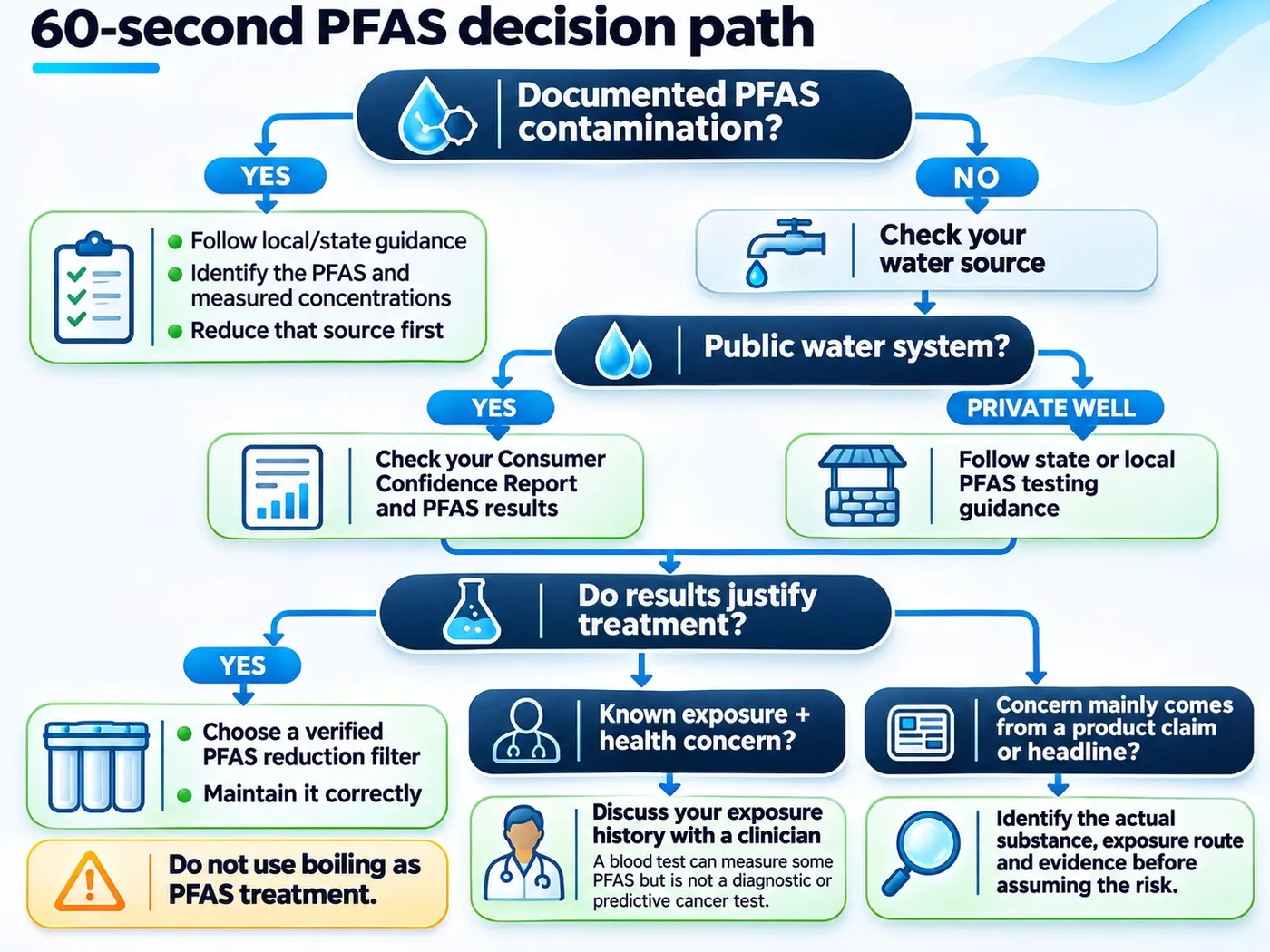
Faster alternative: a 60-second PFAS decision path
If you do not want to read the entire guide, use this sequence:
-
Do you have documented PFAS contamination in your water, food source, or workplace?
- Yes: follow local/state guidance, identify the measured PFAS and concentrations, and reduce that source first.
- No: go to step 2.
-
Are you on a public water system?
- Check the Consumer Confidence Report and PFAS results from your utility or state.
- If you use a private well in an affected area, ask your state/local agency about testing.
-
Do your results justify treatment?
- Choose a filter with a verified PFAS reduction certification and maintain it correctly.
- Do not use boiling as a treatment.
-
Are you worried about your health because of a known exposure?
- Discuss your exposure history with a clinician. A blood test may provide exposure information in some situations, but it is not a diagnostic or predictive cancer test.
-
Are you worried mainly because PFAS are mentioned on a product or in a headline?
- Identify the actual substance, material, exposure route, and evidence before assuming the risk is equivalent to contaminated drinking water.
FAQ
Are all PFAS equally harmful?
No. PFAS differ in structure, persistence, mobility, bioaccumulation, human exposure, and the amount and quality of toxicological evidence. PFOA and PFOS are among the most studied, but findings for them should not automatically be assigned to every PFAS.
Is fluoride the same as PFAS?
No. Fluoride is an inorganic ion. PFAS are fluorinated organic chemicals containing carbon-based structures. Fluoride in toothpaste or fluoridated drinking water is not the same exposure as PFAS.
Does boiling water remove PFAS?
No. Heating or boiling is not an effective PFAS-removal method and can concentrate contaminants left behind as water evaporates.
Can a refrigerator or pitcher filter remove PFAS?
Some specific models can reduce certain PFAS, but the product category alone tells you nothing. Check the exact model for an independent PFAS reduction certification, the substances covered by the claim, capacity, and replacement schedule.
Does PFOA-free mean PFAS-free?
No. “PFOA-free” addresses PFOA. A product could be PFOA-free and still use another PFAS or fluorinated material. “PFAS-free” is a broader claim and should be defined and supported by the manufacturer.
Should I throw away my nonstick pans because of PFAS?
Not simply because the coating is PTFE. FDA distinguishes polymerized nonstick coatings from small PFAS such as PFOA and reports negligible migration from authorized polymerized coatings under evaluated uses. Follow manufacturer instructions and replace damaged cookware as appropriate. If you prefer cookware without fluoropolymer coatings, that is a product choice—not evidence that every PTFE pan creates the same exposure as contaminated water.
Can I tell whether I have PFAS in my body from symptoms?
No. PFAS exposure does not have a characteristic symptom pattern. Blood testing can measure certain PFAS, but it cannot diagnose a PFAS-caused illness, identify the source, or predict future disease.
Can I detox PFAS naturally?
There is no approved medical PFAS detox treatment. Be cautious of supplements, cleanses, or procedures marketed as PFAS removal. The evidence-based priority is to identify and reduce ongoing exposure.
Is bottled water safer than tap water for PFAS?
Not automatically. FDA testing has detected PFAS in some bottled-water samples, while many public water systems have low or nondetectable PFAS levels. The better source is the one supported by relevant testing for your situation.
Are PFAS banned in the United States?
No. PFAS regulation is substance- and use-specific. Some uses have been phased out or restricted, and EPA regulates certain PFAS in drinking water, but there is no single U.S. ban covering the entire PFAS family.
Can PFAS contamination be permanently removed?
PFAS can be separated from water and some PFAS can be destroyed with specialized treatment, but there is no single universal process that permanently solves every PFAS contamination problem. Treatment also has to address spent media, concentrates, residuals, emissions, and transformation products.
What to remember
PFAS are a family, not a single poison with one exposure route and one health effect. The most useful way to think about them is to move through a sequence:
identify the substance → identify the exposure route → measure or verify the source → interpret the evidence → reduce the important exposure first.
For U.S. households, drinking water deserves particular attention when local contamination is documented. Food and consumer products can also contribute, but the importance of each source varies.
The strongest practical actions are therefore surprisingly straightforward:
- use current local water data;
- test private wells when authorities recommend it;
- use properly certified and maintained filtration when it is warranted;
- treat product claims precisely;
- do not rely on boiling or detox products;
- use blood testing only with a clear understanding of its limitations;
- check current EPA, FDA, ATSDR, state, and local guidance when making decisions.
The science is still evolving, but uncertainty is not a reason for either panic or complacency. It is a reason to be precise about which PFAS, which exposure, which evidence, and which action.
Related articles
- Is Spider Silk Stronger Than Steel? What the Science Actually Shows
- Do Mammals Really Get 1 Billion Heartbeats? What the Science Shows
- How Does Google Maps Find the Fastest Route So Quickly?
References
The sources below were checked for this review on November 5, 2026. U.S. regulatory pages should be rechecked before publication or after any major EPA rulemaking update.
- U.S. Environmental Protection Agency. PFAS Explained.
- U.S. Environmental Protection Agency. Our Current Understanding of the Human Health and Environmental Risks of PFAS.
- Agency for Toxic Substances and Disease Registry. How PFAS Impacts Your Health.
- Agency for Toxic Substances and Disease Registry. Human Exposure: PFAS Information for Clinicians.
- Agency for Toxic Substances and Disease Registry. Clinical Evaluation and Management: PFAS Information for Clinicians.
- Agency for Toxic Substances and Disease Registry. Testing for PFAS.
- Agency for Toxic Substances and Disease Registry. Breastfeeding and PFAS.
- International Agency for Research on Cancer. IARC Monographs Volume 135: Perfluorooctanoic Acid (PFOA) and Perfluorooctanesulfonic Acid (PFOS).
- U.S. Environmental Protection Agency. PFAS National Primary Drinking Water Regulation.
- U.S. Environmental Protection Agency. Proposed PFOA and PFOS Compliance Extension Rule.
- U.S. Environmental Protection Agency. Proposed PFAS Rescission Rule.
- U.S. Environmental Protection Agency. Reducing PFAS in Your Drinking Water with a Home Filter.
- U.S. Environmental Protection Agency. Identifying Drinking Water Filters Certified to Reduce PFAS.
- U.S. Food and Drug Administration. Questions and Answers on PFAS in Food.
- U.S. Food and Drug Administration. Authorized Uses of PFAS in Food Contact Applications.
- U.S. Food and Drug Administration. Analytical Results of Testing Food for PFAS from Environmental Contamination.
- U.S. Environmental Protection Agency. 2026 Interim Guidance on the Destruction and Disposal of PFAS and Materials Containing PFAS.
- Andersson, C. V. I., et al. (2026). Efficient Removal of Short-Chain Perfluoroalkyl Substances by Cavity-Directed Aggregation in a Molecular Cage Host. Angewandte Chemie International Edition.
Last reviewed
Last reviewed: 2026-11-05
Review scope:
- U.S. federal PFAS drinking-water regulation and 2026 proposed rule changes;
- ATSDR exposure, health-effects, blood-testing, pregnancy and breastfeeding guidance;
- IARC PFOA/PFOS cancer hazard classifications;
- FDA food, food-contact and bottled-water information;
- EPA home-filter and PFAS destruction/disposal guidance;
- 2026 peer-reviewed molecular-cage PFAS capture research.
Related guides
Carefully selected guides to help you understand the topic and complete the next useful step.